
Standard Stroller Features That Matter
Updated
The features that matter on a standard stroller come down to a short list you touch on every trip — a five-point harness, a one-hand fold, wheels matched to your ground, and a recline flat enough for a newborn — and a longer list of showroom features you pay for and forget. This page sorts the two, so you buy for the twenty daily uses, not the two-a-year ones.
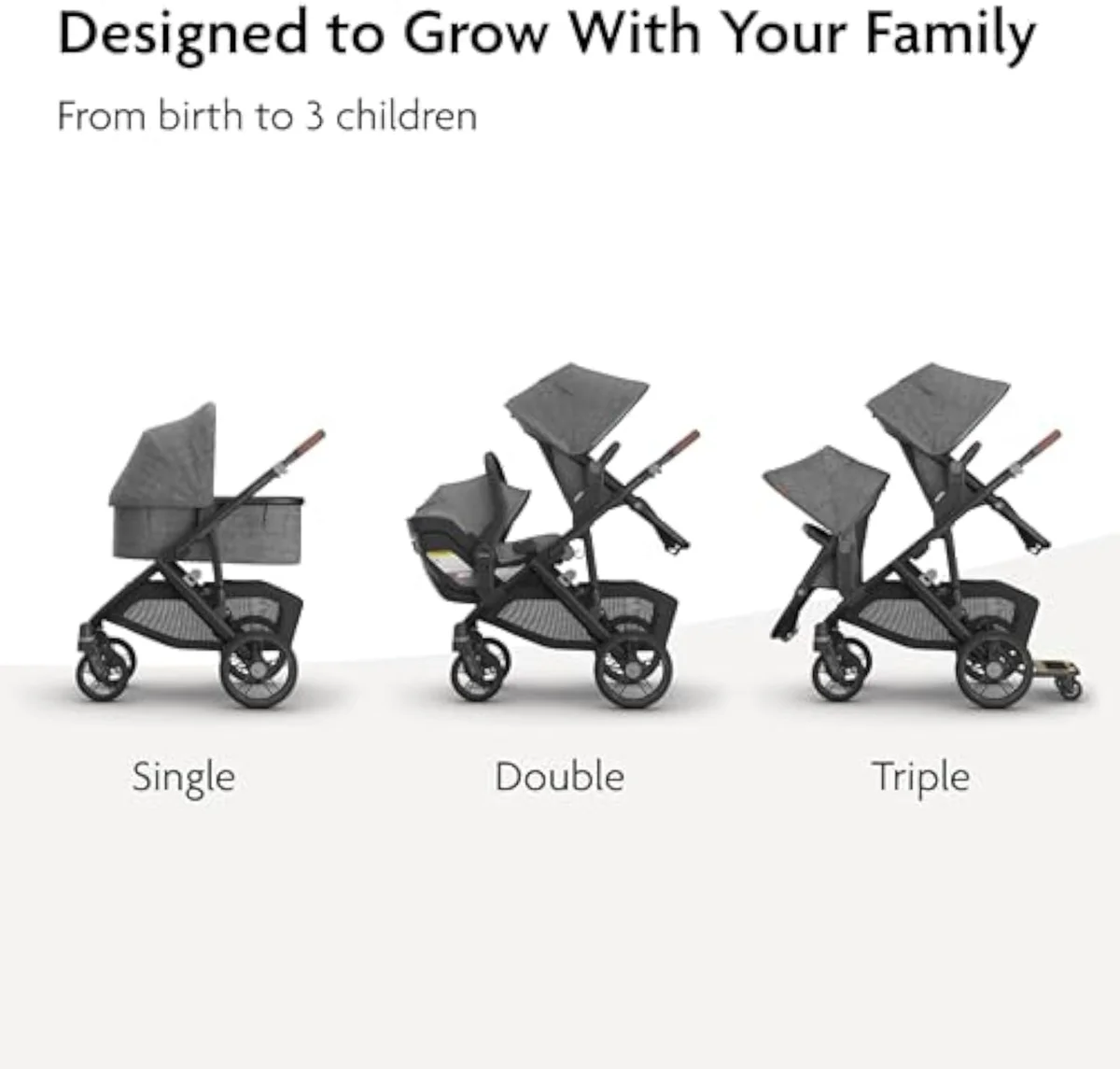
- 0–6 monthsNewbornLie-flat / bassinet / prametteA near-flat recline or bassinet is what makes a stroller newborn-safe from day one — and the whole thing is what you lift to the car.33 lb median carry weight
- 6–12 monthsSitting infantUpright reversible seatOnce your baby sits up, the seat comes upright and often reverses to face you — the mode most owners actually live in.4 of 23 at/under the 20 lb one-handed line
- 12–36 months+ToddlerForward-facing toddler seatThe seat has to still fit a two-to-three-year-old — the published max child weight is how long the stroller lasts before it is outgrown.40 lb median max child weight
- Strollers analyzed
- 53
- Publish a carry weight
- 23
- Publish a child-weight cap
- 17
Bottom line
Buy for the four features you use on every trip — a five-point harness, a one-hand fold, wheels matched to your ground, and a recline flat enough for a newborn — then treat every extra mode as optional. StrollerWise's analysis of the features owners praise versus the ones they regret paying for found the same split every time: the parts you handle daily earn their keep, and the bonus configurations gather dust in a closet. A stroller is more than a set of wheels, but the wheels are where you start.
Safety features you confirm by hand
The features that matter most on a standard stroller are the safety ones you confirm by hand, not by reading the box: a five-point harness, brakes that lock on a slope, a sturdy frame, and a wide base that keeps a loaded stroller from tipping when you hang a 5-pound diaper bag off the handle.
Skip the spec sheet for a second. A good stroller does more than roll. As Consumer Reports puts it:
The Bump agrees on what makes a frame safe for the youngest riders:
The fold and weight decide daily use
Here's where the fold earns or loses you: it's the one feature you operate 10 or more times a day.
BabyGearLab is blunt about what separates a great portable stroller from a heavy one:
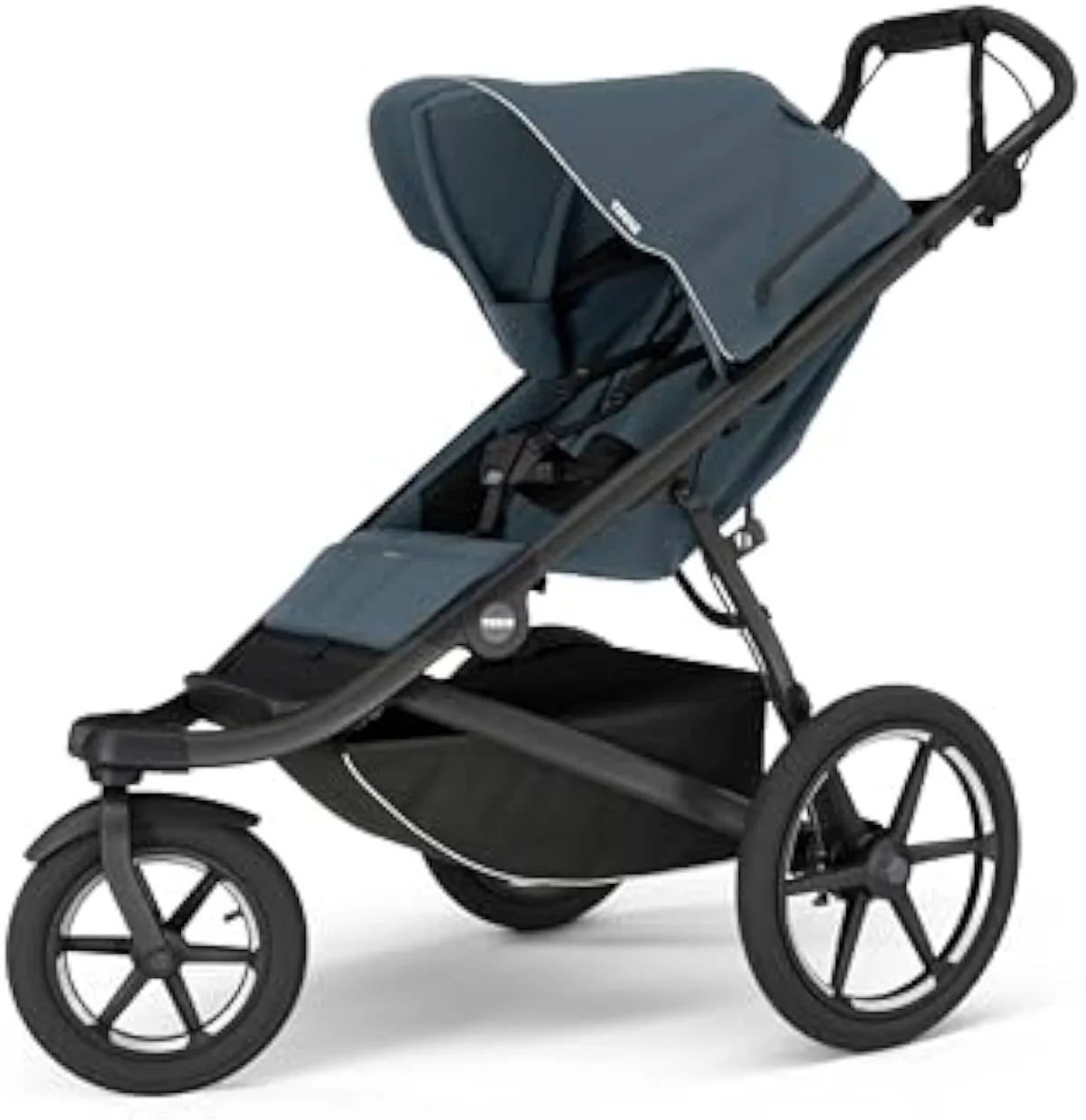
Weight and terrain pull in different directions. Baby Trend notes buyers diverge —
Wheels and suspension: match your ground
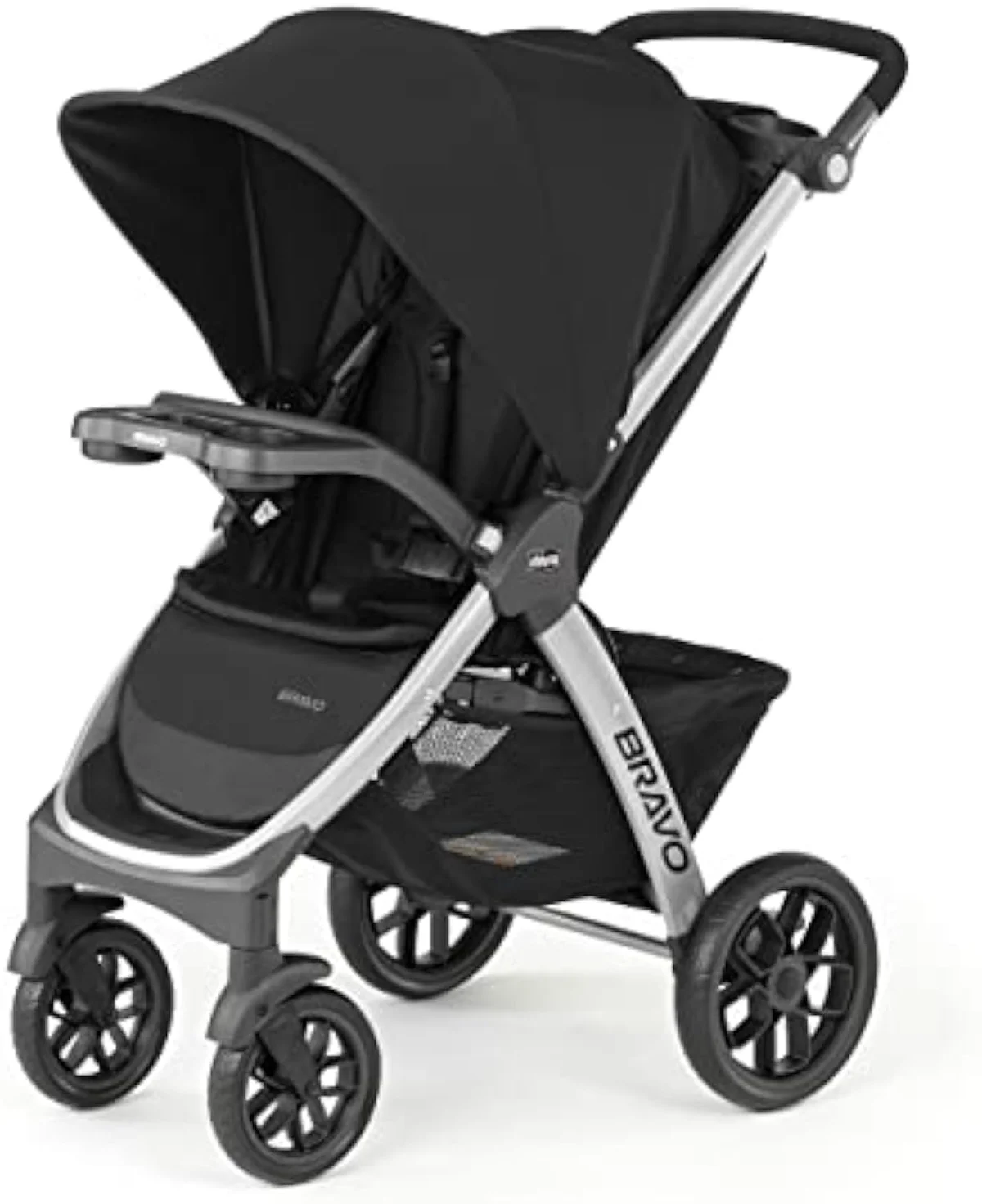
Wheels are a feature you feel, not read. MacroBaby explains why the bigger ones ride better:
Tire type follows terrain. Baby Trend spells out the all-terrain build —
From birth: recline, bassinet, and canopy
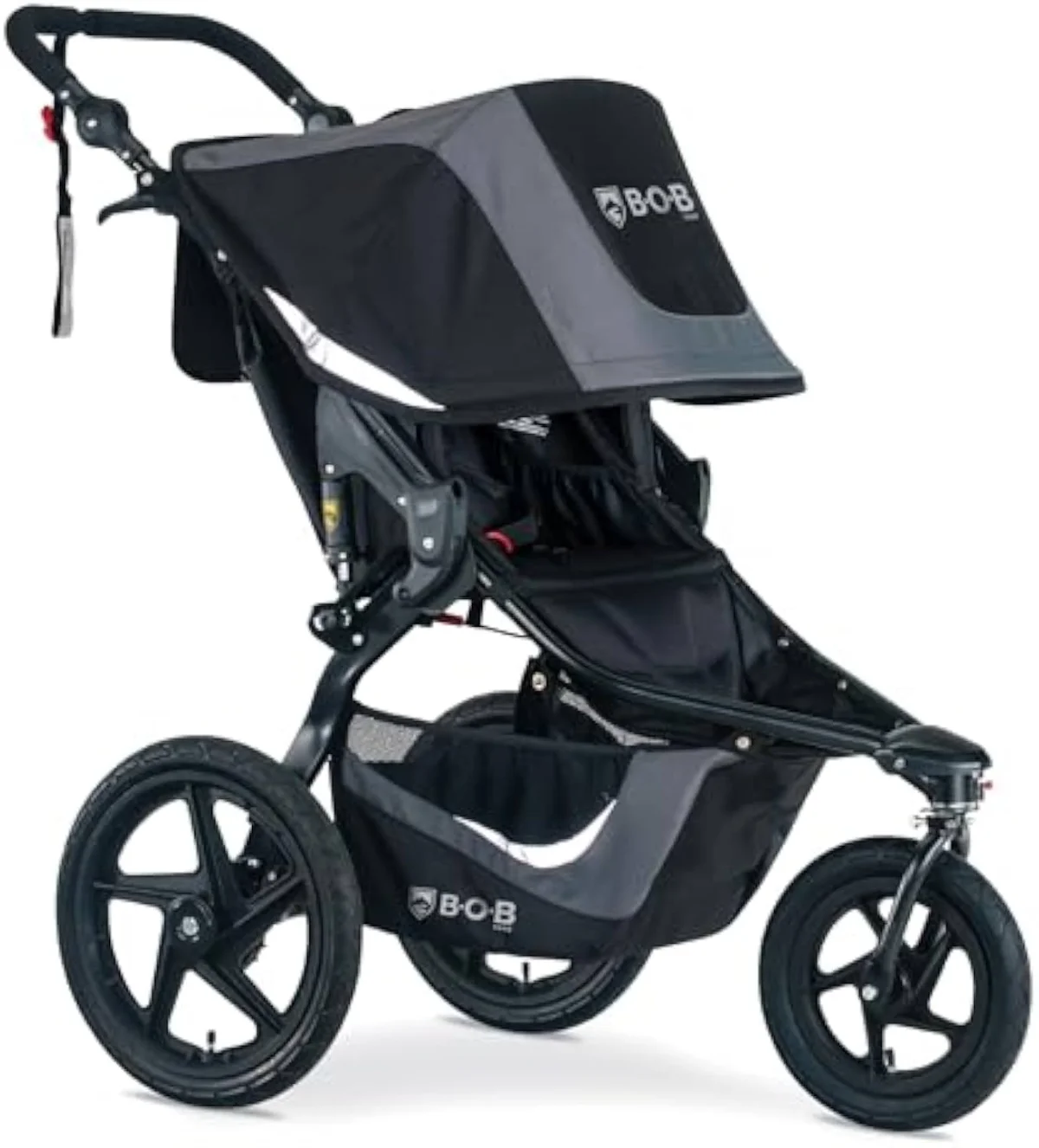
A newborn can't sit up until around 6 months, so the recline is the one feature that clears a baby to ride safely from day one.
The Bump names the two paths to a newborn-safe ride:
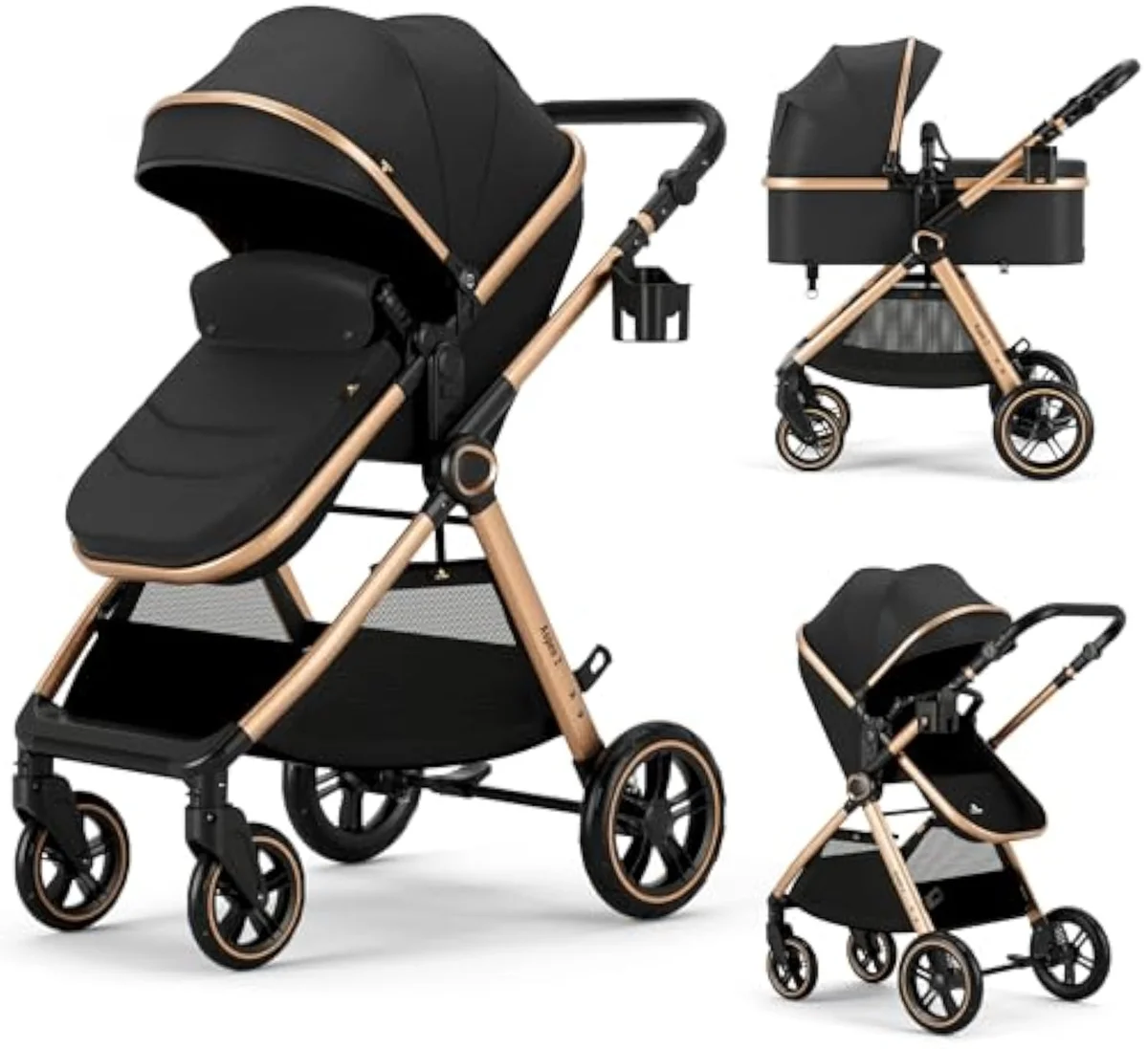
Not every canopy is equal. BambiBaby flags the spec that matters on a sunny day: an
Storage, seat, and car-seat fit
Owners are blunt about this one: the storage basket and the car-seat clip get used on all 20-odd trips a month, unlike a mode you touch twice a year.
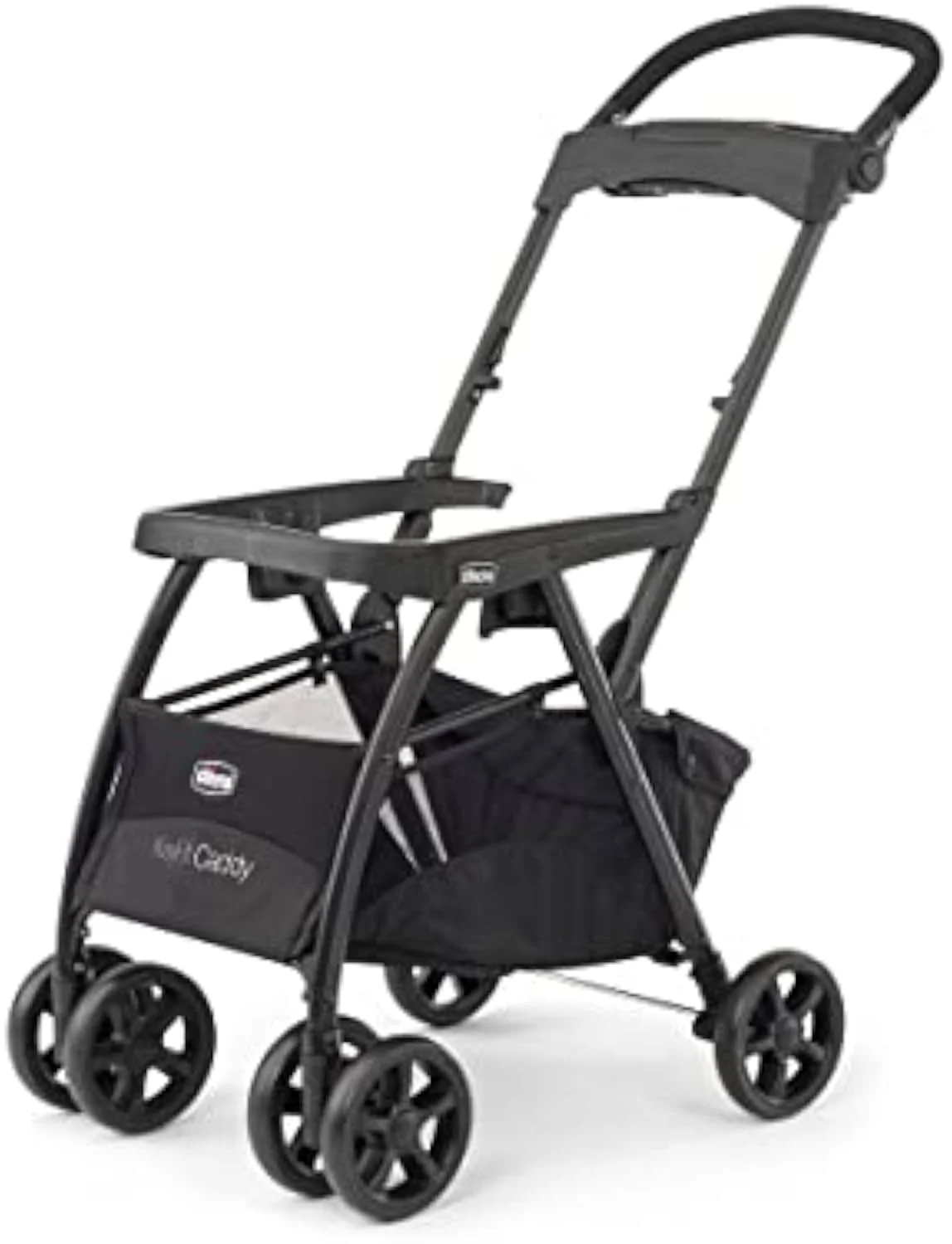
Baby Trend's baseline for a standard frame is unglamorous but right:
Car-seat compatibility is the feature that saves a sleeping baby. Baby Trend describes the payoff
plainly:
Durability is the feature you can't see
The one-star reviews agree on one thing: durability — the feature you can't photograph — decides whether you buy one stroller or three.
Durability has an actual standard behind it. Independent labs note that
Durability is also the cheapest feature over three years. Baby Trend's math is simple:
Features ranked by daily use
Here's what the box won't tell you: buy for the features you touch every trip, not the ones you touch twice a year. This is the split across all 8 features, sorted by how often each one matters.
| Feature | What it decides | How often you use it |
|---|---|---|
| Five-point harness + brakes | Keeps the child secure; the wide base resists tipping | Every trip |
| One-hand fold + weight | Whether it lives by the door or dies in a closet | Every trip |
| Wheels + suspension | Absorb bumps; air vs foam sets the upkeep | Every walk |
| Recline / bassinet | The only thing that makes it newborn-safe | Newborn months |
| UPF canopy | Blocks sun and wind for a newborn | Sunny days |
| Storage basket | Carries the diaper bag you'd otherwise hang off the handle | Every trip |
| Car-seat compatibility | Moves a sleeping baby car-to-frame | First ~9 months |
| Convertible modes | Optional; the feature owners most regret paying for | Rarely |
Buy for the top of that list. A frame that nails the harness, the fold, the wheels, and the recline is one you'll still use at eighteen months; a frame that wins on mode count and loses on the fold is the closet stroller owners keep warning each other about — our guide to choosing a standard stroller turns this list into a four-step decision.
Put these features to work
Take this checklist to a real decision. Start with the four-step buying framework, compare two premium frames across all eight features above, then read the flagship review where owners admit the one feature that costs them.
Want the safety and durability features in depth? Our rundown of known stroller risks covers the harness, brake, and stability failures, and our breakdown of stroller test methods explains what EN 1888 actually proves.
Sources
- Consumer Reports best strollers and buying advice
- Baby Trend stroller comfort and everyday-use guide
- The Bump parent-tested stroller guide
- MacroBaby 2026 complete stroller guide
- BabyGearLab stroller lab testing
- Bambi Baby 2026 stroller features guide
- Skyline Instruments stroller durability test methods
Stroller features parents ask about
What features matter most on a standard stroller?
Four you use on every trip: a five-point harness with reliable brakes, a true one-hand fold, wheels and suspension matched to your ground, and a recline flat enough for a newborn. Everything else — extra modes, a convert-to-double, a second seat — is optional. Owners regret paying for configurations far more often than they regret a plain frame that nails the daily four.
Is a five-point harness really necessary?
Yes — a five-point harness plus reliable brakes and a wide base is the safety baseline every source names for infants.
Air-filled or foam tires — which is better?
Neither wins outright. Air-filled tires ride smoothest over cracked pavement and gravel but go soft and need a pump every few weeks. Foam-filled tires ride slightly firmer and never need inflation. Match the tire to your ground and your patience for upkeep.
Is a convertible or a travel system worth the money?
A travel system is worth it — clicking an infant car seat straight onto the frame moves a sleeping baby without waking them, and you use it every drive for the first nine months or so. Convert-to-double and extra modes are the opposite bet: owners buy them for a hypothetical second child, then never convert, because hauling attachments across a parking lot is nobody’s idea of easy. Buy the travel-system fit you’ll use now; skip the mode you’re guessing at.
What does EN 1888 tell you about a stroller?
It is the durability standard — a frame tested to EN 1888 has survived stability, impact, and jam-hazard abuse in a lab. It will not tell you a stroller is comfortable, but it tells you the frame and wheels are built to last.
Read the Full Review
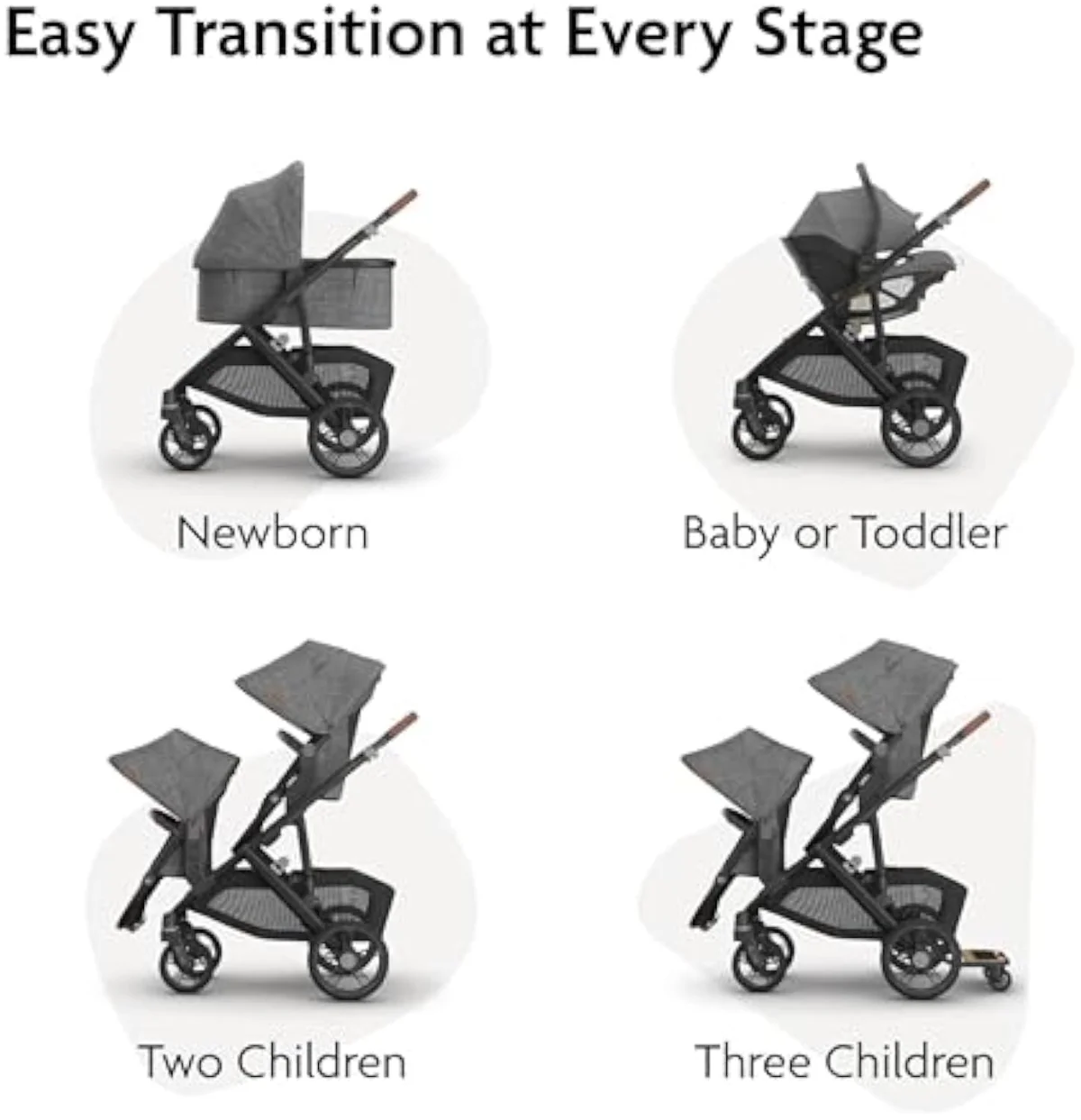
Want a deeper look at the UPPAbaby Vista V3 Convertible Single-to-Double Stroller for Baby & Toddler?
Standard Strollers notes that actually mention the tradeoffs
Occasional updates on standard strollers evidence, price movement, and buyer-fit changes.
Only when something changes. Unsubscribe anytime.
Citations
- [1]"A good stroller is more than a set of wheels for moving a baby."https://www.consumerreports.org/babies-kids/strollers/best-strollers-of-the-year-a5254350204 Verified July 5, 2026.
- [2]"Safety means a secure five-point harness, reliable locking brakes, and a sturdy frame."https://babytrend.com/blogs/bt-blog/baby-strollers-of-2026-our-picks-for-comfort-and-everyday-life Verified July 5, 2026.
- [3]"The safest infant strollers combine a five-point harness, reliable brakes, and a wide base."https://www.thebump.com/a/best-strollers Verified July 5, 2026.
- [4]"A compact fold and lighter weight are the hallmarks of a great travel stroller."https://www.babygearlab.com/topics/getting-around/best-stroller Verified July 5, 2026.
- [5]"Families split: some want a spacious basket, others a one-handed compact fold or reversible seats."https://www.consumerreports.org/babies-kids/strollers/best-strollers-of-the-year-a5254350204 Verified July 5, 2026.
- [6]"Buyers diverge: some want a stroller that handles rough terrain, others want it to grow with the child."https://babytrend.com/blogs/bt-blog/baby-strollers-of-2026-our-picks-for-comfort-and-everyday-life Verified July 5, 2026.
- [7]"Larger wheels and better suspension absorb bumps on sidewalks and uneven paths."https://www.macrobaby.com/blogs/newborn-baby-blogs/best-strollers-for-2026-a-complete-guide-for-modern-families Verified July 5, 2026.
- [8]"Larger air-filled tires and a fixed front wheel give a smooth all-terrain ride."https://babytrend.com/blogs/bt-blog/baby-strollers-of-2026-our-picks-for-comfort-and-everyday-life Verified July 5, 2026.
- [9]"Full-size strollers appeal to families wanting large baskets and smooth suspension."https://www.macrobaby.com/blogs/newborn-baby-blogs/best-strollers-for-2026-a-complete-guide-for-modern-families Verified July 5, 2026.
- [10]"From-birth use needs a bassinet or near lie-flat recline plus car-seat compatibility."https://www.thebump.com/a/best-strollers Verified July 5, 2026.
- [11]"A canopy protects a newborn from jostling and sun exposure."https://www.thebump.com/a/best-strollers Verified July 5, 2026.
- [12]"Sun defense often arrives as an extendable UPF 50+ canopy with a ventilation panel."https://www.bambibaby.com/blogs/learning-center/best-strollers-for-2026 Verified July 5, 2026.
- [13]"Most standard strollers pair adjustable canopies with recline positions and easy maneuverability."https://babytrend.com/blogs/bt-blog/baby-strollers-of-2026-our-picks-for-comfort-and-everyday-life Verified July 5, 2026.
- [14]"The baseline is a comfortable seat, a sturdy frame, and a large storage basket."https://babytrend.com/blogs/bt-blog/baby-strollers-of-2026-our-picks-for-comfort-and-everyday-life Verified July 5, 2026.
- [15]"A strong full-size stroller gives a roomy seat, deep recline, ample storage, and real suspension."https://www.thebump.com/a/best-strollers Verified July 5, 2026.
- [16]"A travel system combines a stroller and an infant car seat."https://babytrend.com/blogs/bt-blog/baby-strollers-of-2026-our-picks-for-comfort-and-everyday-life Verified July 5, 2026.
- [17]"The features to weigh are weight, storage, canopy, and whether it converts to a double."https://www.consumerreports.org/babies-kids/strollers/best-strollers-of-the-year-a5254350204 Verified July 5, 2026.
- [18]"Prams and pushchairs are tested to EN 1888 for reliability, durability, and jam hazard."https://www.skylineinstruments.com/News-98.html Verified July 5, 2026.
- [19]"Testing bodies recommend strollers be evaluated to the EN 1888 standard."https://www.skylineinstruments.com/News-98.html Verified July 5, 2026.
- [20]"Spending more upfront on a durable model beats three cheap strollers that break."https://babytrend.com/blogs/bt-blog/baby-strollers-of-2026-our-picks-for-comfort-and-everyday-life Verified July 5, 2026.
- [21]"A full-size stroller supports everyday use from newborn days through toddlerhood."https://www.thebump.com/a/best-strollers Verified July 5, 2026.