How to Choose a Standard Stroller
Updated
Choosing a standard stroller comes down to one honest move: pick a type before you pick a model. Match your real life — one kid or two, car trips or sidewalks, a second baby on the way or not — to a stroller type, and the fifty-option shortlist collapses to one sensible default that fits how you actually live.
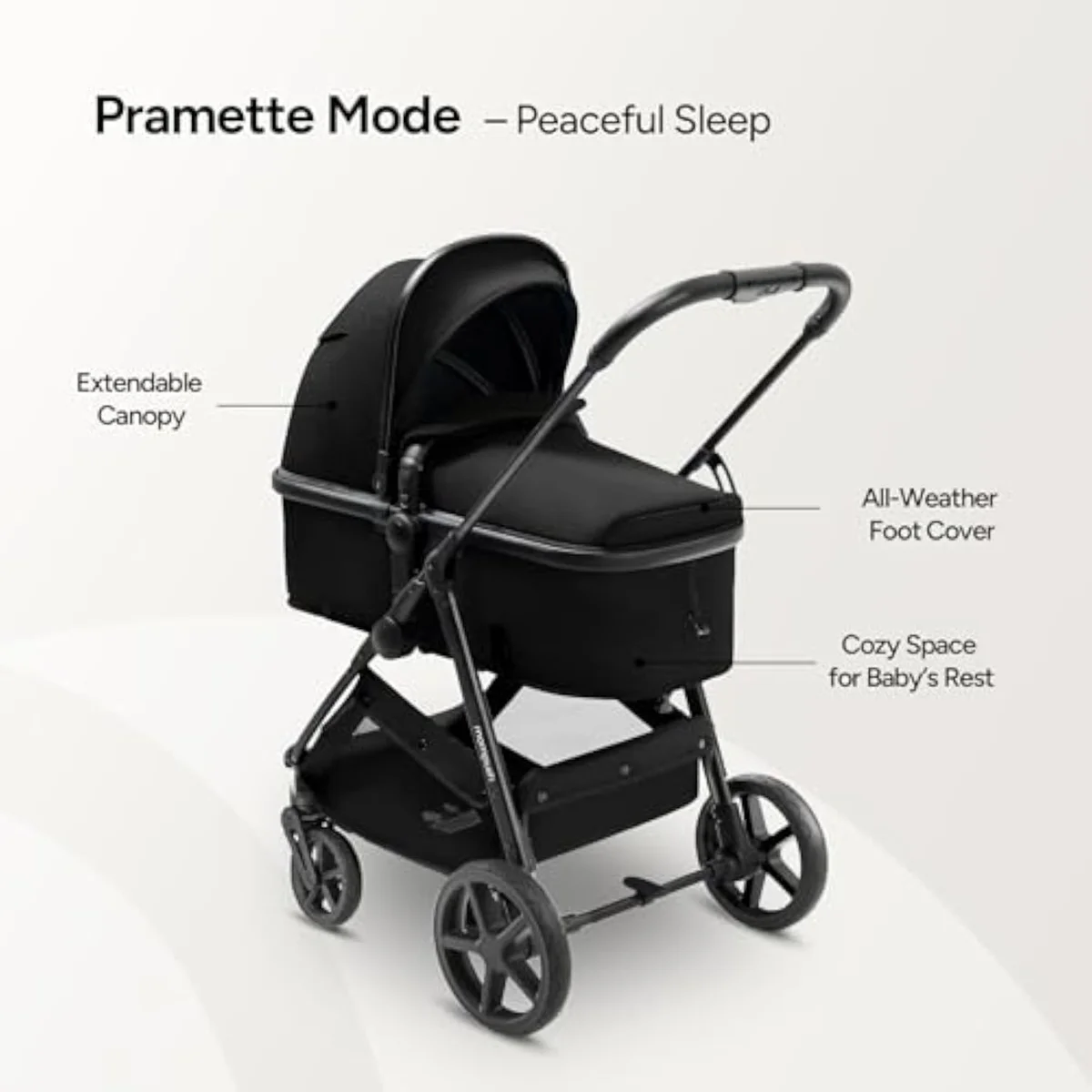
For most first-time parents on a normal budget, that default is a mid-price full-size convertible like the Mompush Wiz — the answer if you push one child on normal terrain and want one frame that lasts. This page walks you from your situation to a type in four honest steps, and it does not hand you another grid to drown in.

- If your life is…One child · mostly city sidewalks and daily walksYou want one frame from newborn to toddler and you push it every day.Start withFull-size convertibleA grows-with-baby frame earns its bulk when it is your everyday ride, not an occasional one.12 in our catalog34 lb typical carry weight$100–$250 band
- If your life is…One child · mostly car trips and errandsThe stroller lives in the trunk and you lift it one-handed with a baby on your hip.Start withLightweight / travelHere the trunk and the one-handed lift decide everything — a do-everything frame you can not close is dead weight.4 in our catalog9 lb typical carry weight$250–$500 band
- If your life is…A second child on the way, or already two under threeYou are carrying two kids now, or you will be within a year.Start withDouble (or single-to-double)If the second child is real and soon, buy the double outright — a convert you never convert is a single you overpaid for.9 in our catalog29 lb typical carry weight$100–$250 band
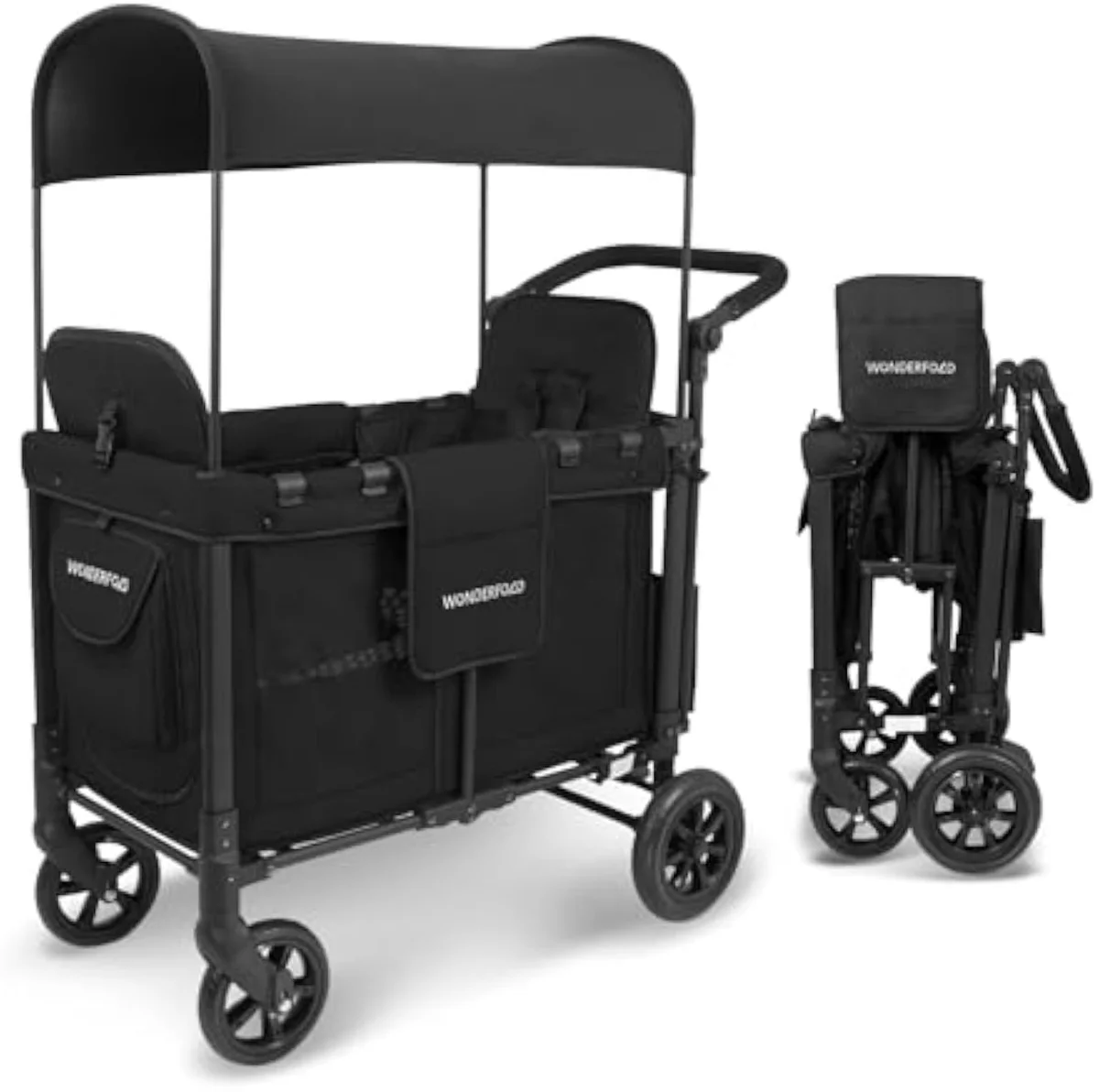
- If your life is…Hauling kids plus gear · parks, trails, the beachYou need cargo room and wheels that survive off the pavement.Start withStroller wagonA wagon hauls two kids and the gear a stroller basket never could — at the cost of weight and a tight-trunk fit.8 in our catalog47 lb typical carry weight$250–$500 band
- If your life is…Undecided · you want it to simply lastYou do not know your must-haves yet and want the safe, do-everything default.Start withFull-size standardA plain full-size frame is the broadest safe bet — deep recline, real storage, a seat that lasts to preschool.20 in our catalog33 lb typical carry weight$100–$250 band
- Strollers sorted
- 53
- Types mapped
- 5
Bottom line
Our sort of all 50 strollers in the catalog lands on five buyer types, and the median carry weight runs from about 9 pounds for a travel frame to the low 50s for a wagon — that one spec, more than any feature list, decides whether the stroller lives in your trunk or your garage. Pin your real use, pick the type that matches it, then choose a model inside that type.
Start with the type, not the features
The single mistake that stalls first-time parents is comparing feature to feature across the whole market, brand by brand, until every option blurs.
Do not do that.
Consumer Reports is blunt: there is no one best stroller, and
Pin the three things that actually matter
Skip the spec sheet for a second. Before you look at a single stroller, answer three questions about your life — not the stroller’s.
The Bump frames it well: to choose,
Modes you’ll use, modes you’ll never touch
Here's what the box won't tell you: the convertibility that sells the stroller is the same convertibility owners most often regret.
The loudest pattern in owner reviews is not a broken wheel — it’s a mode bought and never used: the
bassinet that comes off after two months, the single-to-double that stays a single because wrestling
the seats apart in a busy parking lot while a toddler howls is a one-time mistake most owners make. A
frame stroller sidesteps that trap by design; choosing one, BabyGearLab notes,
Match your real life to a type
With your three answers in hand, here is how each situation maps to a type — the same logic the finder above runs on our catalog.
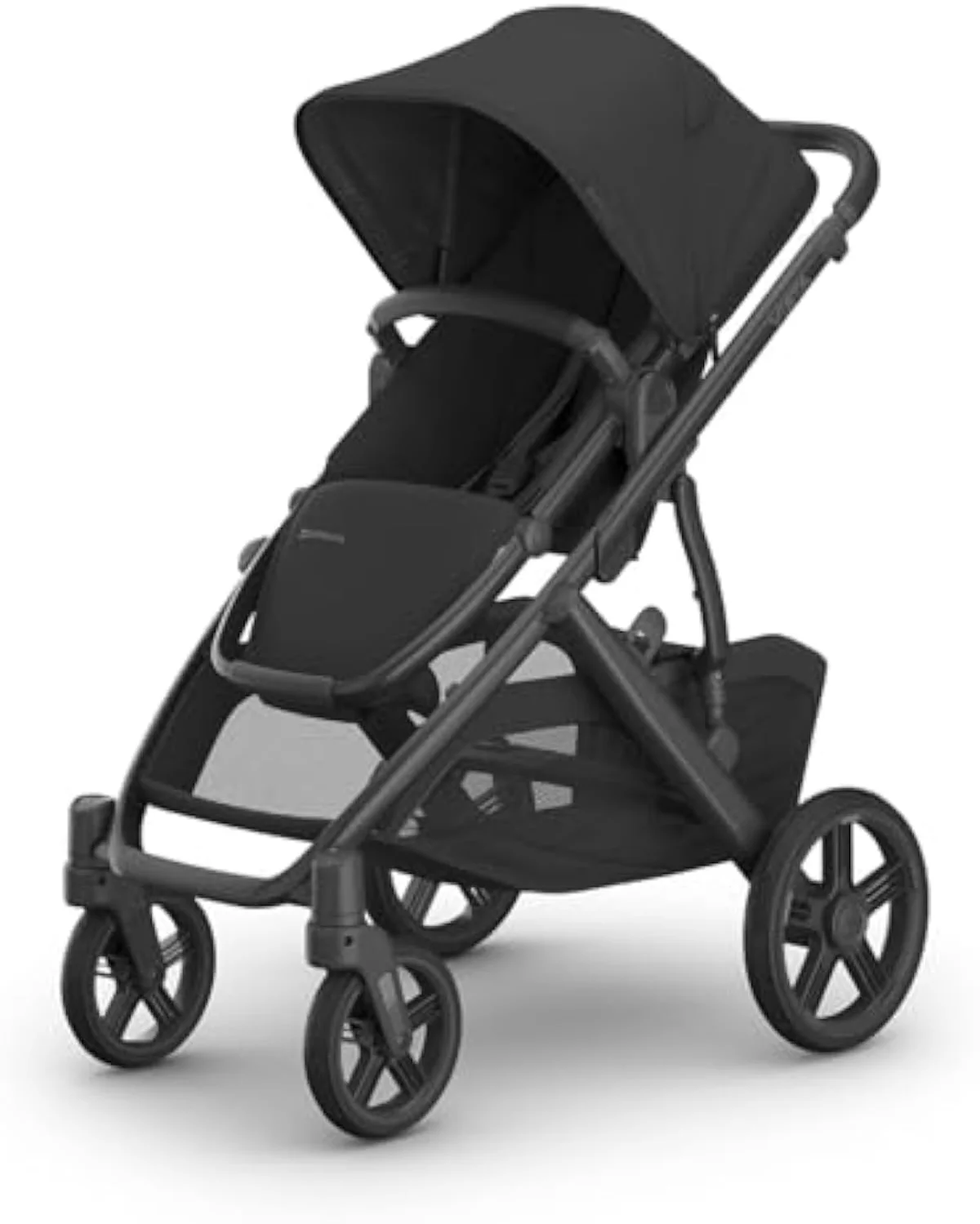
One child, mostly sidewalks. A full-size frame is home base: The Bump calls a sturdy
everyday stroller
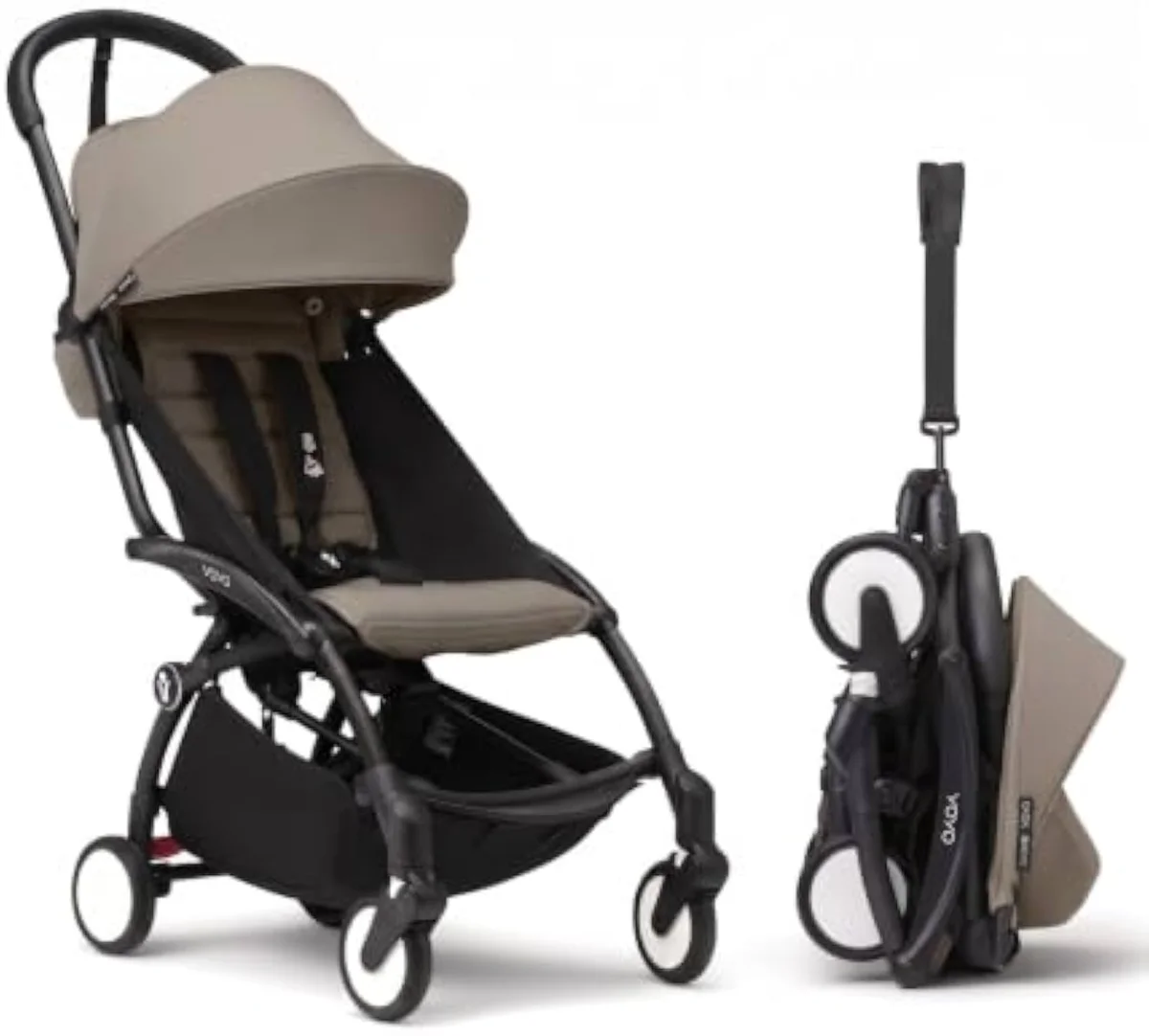
Mostly car trips. Go light. Buyers split into two camps —
Two kids, now or soon. Buy the double outright — but check it fits your car first,
because
Read the size specs without getting fooled
Once the type is set, a handful of specs — not the whole sheet — tell you if a model is any good.
Consumer Reports lists what to read after you pick a type:
| Spec | What it actually decides | The number to check |
|---|---|---|
| Recline | Whether a newborn can ride safely from day one | Near-flat or bassinet |
| Carry weight | Whether you can lift it one-handed into a trunk | Around 20 lb one-handed; a travel frame near 17.5 lb |
| Seat weight limit | How long before your toddler outgrows it | The ~50 lb full-size ceiling |
| Brakes | Whether it holds the second you stop | Easy one-touch, engaged on every stop |
Budget versus worth it, across the band
Standard strollers run from under a hundred dollars to over a thousand.
Price is evidence, not a verdict.
StrollerWise's synthesis of the catalog puts full-size convertibles in the $100–$250 band and wagons
a tier or two higher — the type you need moves your budget more than the brand on the box does. A
budget name is a question to investigate, not an automatic trap, and a flagship is not an automatic
win. What you pay for at the top is real: a best-value pick can be one
The default pick, and when to skip it
So, a verdict. For most first-time parents pushing one child on normal terrain, start with the Mompush Wiz — a mid-price full-size convertible with the deepest owner evidence in our catalog and a fold owners call easy. It is the sensible default, not the fanciest box on the shelf.
Owners are blunt about this one, though: skip that default if your life says otherwise. If the stroller lives in your trunk and you fly, buy a lightweight travel frame instead. If you have two under three, buy a double now, not a convert-it-later. If your weekends are parks and trails with gear to haul, buy a wagon like the Jeep Deluxe Wrangler and accept the weight — or weigh the premium end with our take on whether the WonderFold wagon is worth the money. Buy for the life you have, not the one you might.
The wrong buy here is not a cheap stroller — it’s the expensive one bought for a life you don’t actually live. Choose the type that matches your Tuesday, and the model gets easy.
Take it to a real stroller
Run this framework against a specific pick. Start with the mid-price default, weigh the two premium frames head-to-head, then confirm the fit against your doorway and trunk.
Want the ownership reality after the purchase? The setup and maintenance guide covers the fold and the clips owners fight in month three, and our answer on the best 2-in-1 stroller settles the convertible question one more way. Eyeing a budget name and unsure how long it lasts? Our Baby Joy age-range answer shows how a 0-36 month convertible really spans newborn to toddler.
Sources
Choosing a stroller: the questions parents ask
What is the first thing to decide when choosing a stroller?
The type. Zero in on whether you need a full-size frame, a lightweight travel stroller, a double, or a wagon before comparing a single feature — the type narrows fifty options down to a handful, and everything else is a detail inside that choice.
Full-size or lightweight: which should you choose?
Answer one question honestly: does the stroller live in your trunk or by your front door? If it mostly rides in the car and gets lifted one-handed, buy light. If it gets pushed every day on sidewalks and one frame has to last from newborn to toddler, buy the full-size.
Is a single-to-double worth it for a future second baby?
Only if the second child is really on the way. Owners who buy a single-to-double for a hypothetical baby overwhelmingly end up using it as a single and paying for a mode they never touch. Buy the stroller you need today; buy the double when the second kid is real.
Does a more expensive stroller mean a better one?
No. Price is a question to investigate, not a verdict — some budget picks are the smart buy and some flagships are oversized for the life you actually live.
Which features actually matter once the type is set?
Fewer than the box lists. Recline (a newborn needs near-flat), the fold and weight (can you lift and store it), the seat’s weight limit (how long it lasts), plus storage, canopy, and brakes. Everything past that is a nice-to-have, not a deciding factor.
Our Top Recommendation
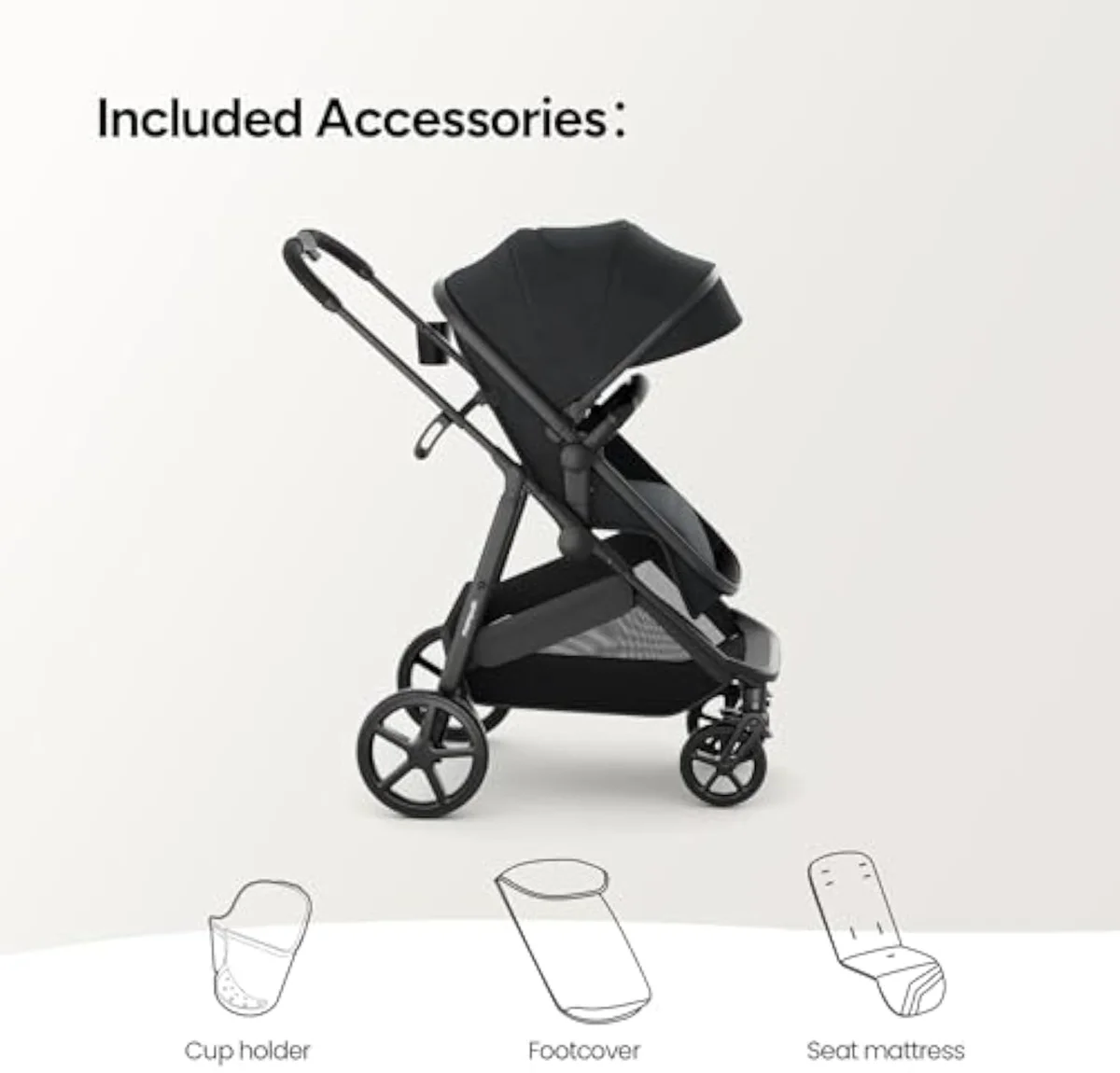
Based on our research, the Mompush Wiz 2 in 1 Baby Stroller with Infant Pramette Mode is our top pick — budget-minded newborn parents who want a flat-reclining bassinet and reversible seat that ride like a luxury pram.
Get Our Top 3 Picks
Get our top 3 picks for your budget — one email, then only updates.
Only when something changes. Unsubscribe anytime.
Citations
- [1]"The way to choose is to narrow the crowded field by a handful of key considerations, not compare every feature."https://www.babygearlab.com/topics/getting-around/best-stroller Verified July 4, 2026.
- [2]"A short set of focusing questions is what helps a buyer decide which stroller fits their family."https://www.babygearlab.com/topics/getting-around/best-stroller Verified July 4, 2026.
- [3]"There is no single best stroller — the right one depends on the child’s age, your budget, and your lifestyle."https://www.consumerreports.org/babies-kids/strollers/best-strollers-of-the-year-a5254350204 Verified July 4, 2026.
- [4]"The first move is to zero in on the stroller type, then evaluate features within it."https://www.consumerreports.org/babies-kids/strollers/best-strollers-of-the-year-a5254350204 Verified July 4, 2026.
- [5]"After the type is set, the features that matter are storage, canopy, weight, accessories, and whether it converts to a double."https://www.consumerreports.org/babies-kids/strollers/best-strollers-of-the-year-a5254350204 Verified July 4, 2026.
- [6]"Pin the real use first: how many kids and their ages, where you push it most, storage space, and budget."https://www.thebump.com/a/best-strollers Verified July 4, 2026.
- [7]"Choosing well comes down to balancing lifestyle, budget, and long-term needs."https://www.bambibaby.com/blogs/learning-center/best-strollers-for-2026 Verified July 4, 2026.
- [8]"The right stroller depends on how you plan to use it, and frequent travelers lean to compact options."https://www.macrobaby.com/blogs/newborn-baby-blogs/best-strollers-for-2026-a-complete-guide-for-modern-families Verified July 4, 2026.
- [9]"For one child in everyday newborn-to-toddler use, a full-size stroller is a smart place to start."https://www.thebump.com/a/best-strollers Verified July 4, 2026.
- [10]"A full-size stroller that folds flat and takes an infant car seat suits a parent who won’t go off-road or run."https://www.babygearlab.com/topics/getting-around/best-stroller Verified July 4, 2026.
- [11]"Some families prioritize lightweight fold-and-carry strollers; others want full-size frames with big baskets and suspension."https://www.macrobaby.com/blogs/newborn-baby-blogs/best-strollers-for-2026-a-complete-guide-for-modern-families Verified July 4, 2026.
- [12]"A frame stroller buys time — it lets you delay deciding which features you’ll actually want."https://www.babygearlab.com/topics/getting-around/best-stroller Verified July 4, 2026.
- [13]"Fitting a double stroller in your vehicle can be a challenge, so test it before you commit."https://www.babygearlab.com/topics/getting-around/best-stroller Verified July 4, 2026.
- [14]"A full-size stroller typically brings a roomy deep-recline seat, big storage, suspension wheels, and car-seat or bassinet compatibility."https://www.thebump.com/a/best-strollers Verified July 4, 2026.
- [15]"A modern travel stroller can weigh as little as 17.5 pounds."https://www.bambibaby.com/blogs/learning-center/best-strollers-for-2026 Verified July 4, 2026.
- [16]"Full-size seats commonly carry a child up to about 50 pounds."https://www.thebump.com/a/best-strollers Verified July 4, 2026.
- [17]"A representative mid-price 2-in-1 convertible weighs 23.1 pounds."https://parenthoodpro.com/mompush-wiz-2-in-1-convertible-baby-stroller-reviews Verified July 4, 2026.
- [18]"A safe stroller has brakes that engage whenever you stop."https://www.thebump.com/a/best-strollers Verified July 4, 2026.
- [19]"Owners value a convertible for going bassinet-to-toddler at an accessible price."https://www.babylist.com/gp/mompush-wiz-stroller/74924/2536421 Verified July 4, 2026.
- [20]"A best-value pick delivers premium features at a noticeably more accessible price than luxury competitors."https://www.bambibaby.com/blogs/learning-center/best-strollers-for-2026 Verified July 4, 2026.