Standard Stroller Cost-Per-Year Calculator
Work out what a stroller really costs per year of use — after resale — and whether the convertible or single-to-double premium is worth it for your family.
Updated
Sticker price is the wrong number. A stroller you push for 36 months and resell is a very different buy from one you use for a year and give away — and the loudest regret in owner reviews is paying for convertible modes and single-to-double hardware that never get used. This tool turns a list price into a cost per year of real use, then tells you straight whether the convertible premium is worth it for your family. Put in your own numbers.
Cost & worth-it calculator
What this stroller really costs you
Your numbers
Months of use is how long the stroller is really in rotation — newborn to toddler is about 36. A sibling who reuses it later stretches that further.
Your true cost
Cost per year of real use
$46 / year
After the resale you expect — spread across the months you'll actually push it.
Per month of use
$4
Net cost after resale
$139
Price minus $46 you expect back.
Is the convertible premium worth it for you?
Do not pay today for a maybe.
A second child two or three years out is a maybe, and a maybe does not justify a premium you pay now and store in a closet. If the second baby arrives, you can buy the double then — usually for less than the convertible upcharge stacked on top of this stroller.
What we'd do Buy the stroller this baby needs and revisit a double only when a second child is real. Over-buying for a hypothetical is the pricier bet at the cost-per-year above, not under-buying.
Default price is the median of the 53 strollers StrollerWise tracks — replace it with the one you're weighing.
The rule the calculator enforces: a convertible or single-to-double only earns its premium when a second child is real and soon. For a maybe, buy the stroller this baby needs and skip the upcharge — the money is better spent on the car seat.
How to read your number
The headline figure is cost per year of real use: net price — what you paid minus the resale you expect back — divided across the months the stroller is actually in rotation, then annualized. A round $300 stroller kept 36 months at zero resale lands near $100 a year; the same stroller resold for a quarter of its price drops toward $75. The per-month line is the same math at a smaller scale, useful when you are weighing a stroller against a monthly rental or a hand-me-down.
Months of use is the input people get wrong. A standard stroller has to carry a child from birth through toddlerhood, which is roughly a three-year, 36-month window — the calculator's default. If a younger sibling reuses the frame, push that number higher, because every extra month you spread the cost across drops the per-year figure. A stroller is only expensive relative to how long you keep it working.
Why cost per year beats sticker price
Standard strollers run a barbell from under $100 to past $1,000, and sticker price sorts them badly. A round $1,000 premium frame used for 36 months with strong resale can cost less per year than a $200 budget stroller that is worn out and worth nothing in a year. Resale is the hinge: our brackets assume none for a heavily used budget brand, about 25 percent for a mid-tier stroller in good shape, and roughly 40 percent for a premium name like UPPAbaby that holds its value on the used market. Change that one dropdown and watch the yearly cost move — that is the number that should decide the purchase.
The premium you're actually paying for
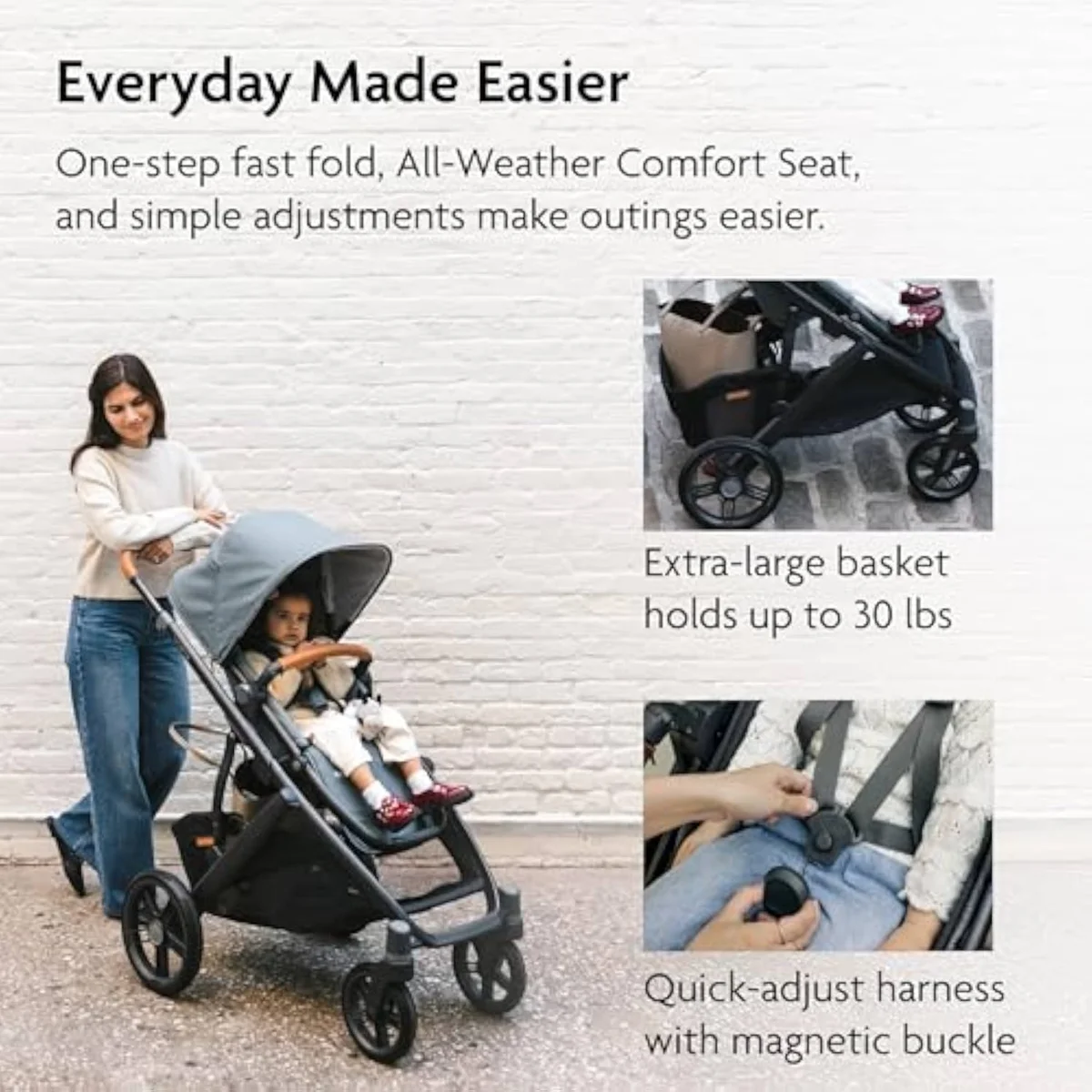
A single-to-double or 3-in-1 convertible charges you up front for a mode you might never switch into. StrollerWise's read of the owner reviews keeps landing on the same regret: parents buy the convert because the demo looks effortless, then run it as a plain single because unclipping seats and hauling attachments across a parking lot with a screaming toddler is nobody's idea of a good time. The calculator prices that honestly — if a second child is only a maybe, it tells you to skip the premium, because you are paying today for hardware that will sit folded in a closet. See the UPPAbaby Vista V3 review for the flagship version of exactly this trade, or the Vista V3 vs Cruz V3 comparison for the upcharge priced against the single that skips it.
When the convertible math flips
Set the second-child dropdown to "already have two under 3" and the verdict flips to buy, because that is the one case where the double is not a hypothetical — it is the seat you use every morning. "Planning within about two years" is the genuine borderline, and resale breaks the tie: with strong resale, buy the single now and sell it near-full when the second baby arrives; with weak resale, one frame that scales beats buying twice. If you are still deciding which type fits your life at all, the standard stroller buying guide walks the whole framework. The point is not that convertibles are a trap — it is that the premium only pays when the second seat is real and soon.
What the calculator can't tell you
Cost per year is one axis, and it is deliberately blind to two others. It does not price fit — whether the folded frame clears your 32-inch doorway and your trunk, or if you can manage the one-handed lift of around 25 to 30 pounds that reviewers hold standard strollers to. And it does not price safety or a brand's recall history, which is a pass-or-fail gate, not a line item. Use the number to compare two strollers you are seriously weighing — not to talk yourself into the cheapest frame on a page. The bassinet worth-it breakdown covers the other mode the cost math quietly punishes.
Questions parents ask about stroller cost
Is a $1,000 stroller ever cheaper than a $200 one? Per year, yes. A premium frame used 36 months with 40 percent resale can undercut a budget stroller that is landfill in a year. The calculator shows exactly where that line sits for your two candidates.
What resale percentage should I assume? Zero for an unknown budget brand or a hard-used stroller, about 25 percent for a clean mid-tier model, and near 40 percent for a premium name with a strong used-market following. When in doubt, assume less — an optimistic resale number is how the convertible premium talks you into it.
Does the tool include running costs? No. A stroller has no fuel or filters, so the only real costs are the price, the months you use it, and what you recover on resale. That is why the three inputs above are the whole model.
Sources
Get Our Top 3 Picks
Get our top 3 picks for your budget — one email, then only updates.
Only when something changes. Unsubscribe anytime.